Showing posts with label Thermarest Neoair. Show all posts

Thursday, February 09, 2012

Some Observations in Winter Backpacking

Ice hangs over the Appalachian Trail in Shenandoah NP
So I did a few days "winter" backpacking last weekend and made some observations. Normally I never go out this time of year but decided with the weather a bit milder that I'd give it a whirl. My intent was to do the central and northern sections of Shenandoah National Park and hopefully complete for the third time my hike of the entire park that began last summer.


Day One - It's raining. I mean, not just raining. It's pouring. I am sitting at the Swift Run Gap ranger station, filling out my backcountry camping permit and wondering why on earth I would leave the car with dry gear to head out into a deluge. But I shoulder my pack anyway and begin.

Rain rapidly collects inside my pack cover and soaks the bottom of my pack.

Observation 1 - If rain does collect inside your pack cover and the bottom of the pack becomes saturated, no garbage compactor bag inside the pack will keep things dry. So double bag your gear or be prepared to dry it all out.
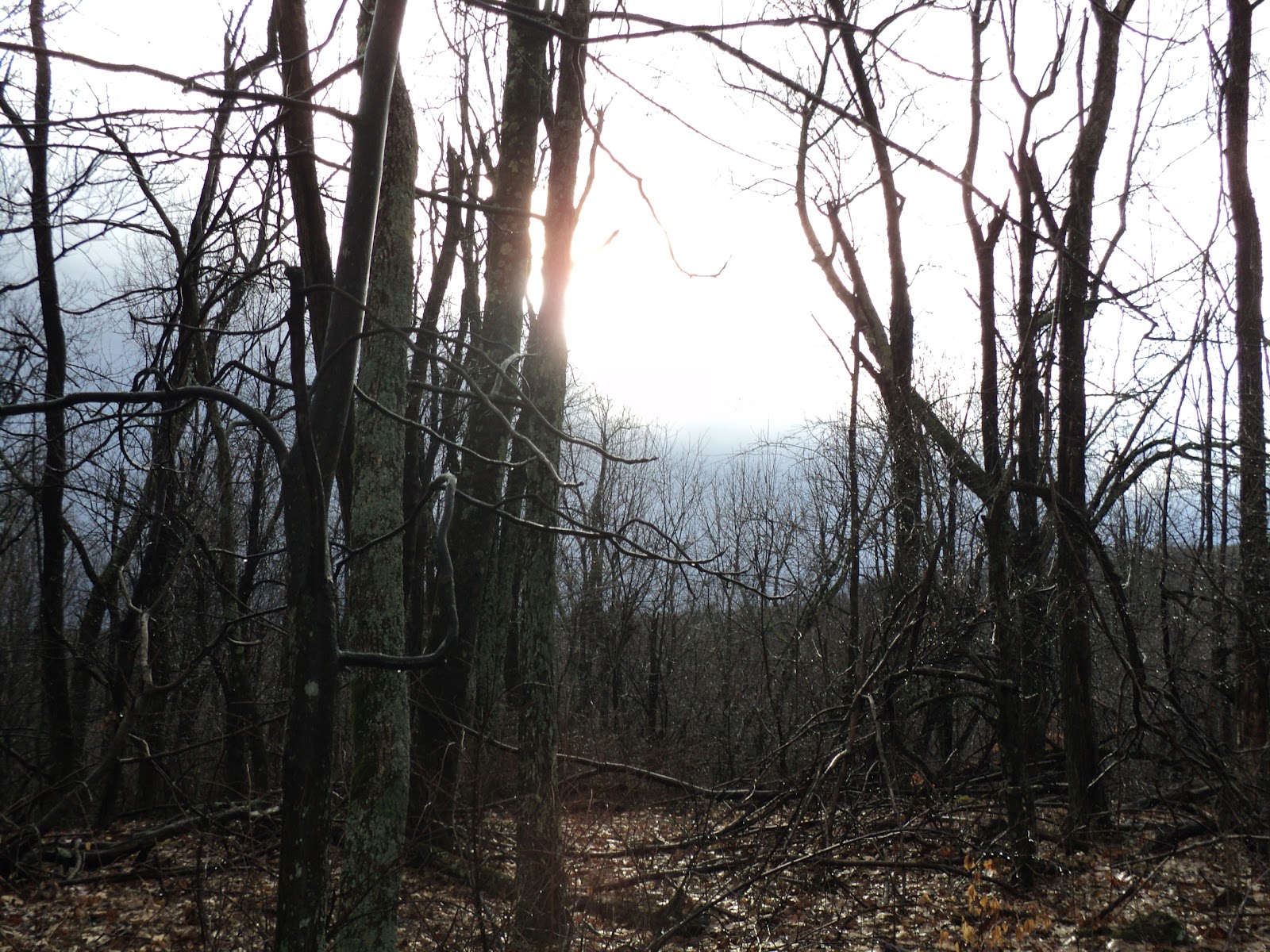

The sun peeks out on the way to South River

After an hour of this, the rain lets up and the sun makes an appearance. The worst is over. When I stop for lunch at an empty Lewis Mtn, I begin the drying process.

Observation 2 - the ULA Catalyst backpack dries very quickly!

I head for my night's destination, Franklin Cliffs north of the Big Meadows and after Fisher's Gap.                                                                                                                                                                         
                    
View from cliffs near Big Meadows
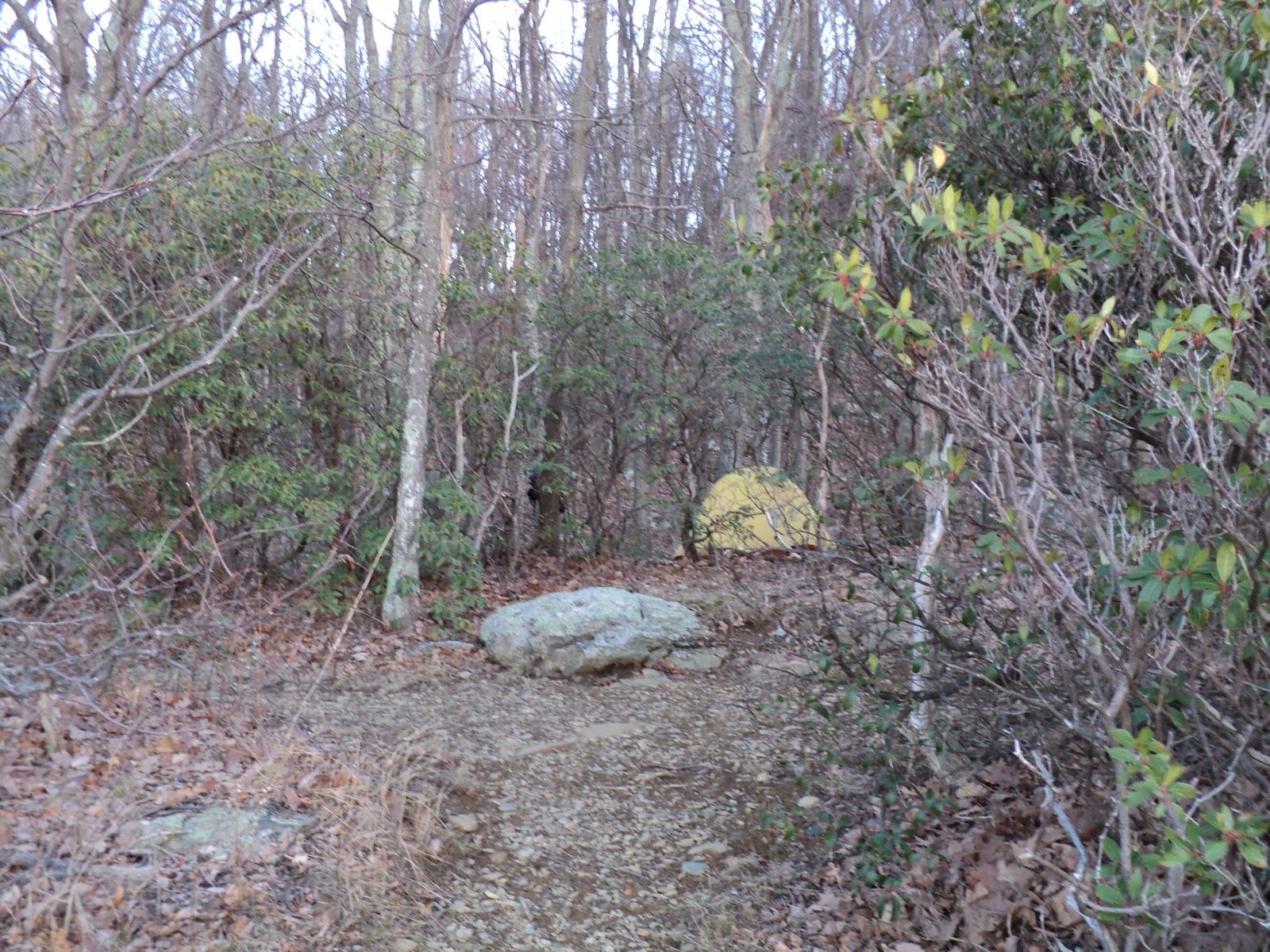
My campsite at Franklin Cliffs


The day clears beautifully and magnificent views are at every overlook. Shenandoah is great in the winter and early spring. There are views you can't see any other time of year, and the tourists are nowhere to be found. I did not see a single person all day.


I found a good campsite by Franklin Cliffs, but high winds made it very cold.

Observation 3 - Do not let yourself get chilled through. Change to your heavy camp clothes ASAP. I didn't and found it impossible to keep warm at night, even with my 15 degree bag in the 20's. I had to wear my down jacket inside my bag and barely kept warm. Also I did not bring a good enough pad to go under my Thermarest neoair. The neoair must have a secondary pad for insulation in temps below 30 degrees.

Observation 4 - Water does not freeze when I kept it under the vestibule. But condensation on the tent fly did and nicely flew off like snow.

Observation 5 - If you choose to eat bars for breakfast, be sure you let them warm up in your pocket. Trying to eat a Cliff bar half frozen is a recipe for breaking teeth.

Observation 6 - Do not wear crocs on slippery rocks where ice has formed to retrieve a bear bag. I did and promptly pulled a ligament in my foot. The injury bothered me for a bit on Day 2, but I hiked on. That is until mile 13 when the pain became too great. I decided not to push it and bailed out just shy of Mary's Rock.

Observation 7 - A more extensive injury is not worth continuing on with your hike. If you are having pain, get off and rest it. The trail will always be there, waiting for your triumphant return.

The sun sets at Franklin Cliffs

Looking toward Mary's Rock northbound

Tuesday, November 22, 2011

Making a List and Checking it Twice

At a speaking event at REI Richmond with my gear display
The holidays are upon us and so, too, are those great long distance hikes planned for next year. I thought I’d go ahead and post my typical gear list for a March start in the south along the Appalachian Trail and then some places that have done me well in purchasing gear.

Packing
ULA catalyst
Sil nylon or Sea to Summit pack cover
Garbage compactor bag to line it

Shelter
MSR Hubba with four stakes
Piece of tyvek for groundcover
Small amt of cord for tying off
2 small lightweight towels (one personal, one to dry off shelter)

Sleeping & Comfort
15 degree Montbell down bag (in ultralight compression bag)
Cocoon silk liner
Thermarest Neoair regular pad
Gossamer Gear thin pad
2 small cocoon pillows (luxury item)
z-rest seat pad

Cooking and water
Snowpeak litemax titanium stove and fuel canister
Lighter with book of matches as backup
Snowpeak titanium trek 700 cook pot
Lexan spoon
Pot cozy
Small cup
Sil nylon bag to store
Sea to summit waterproof food bag and 50 feet of cord
3 liter platypus bottle and cap for camp water
1 liter bottle
1 aqua fina bottle
Aqua mira to treat

Clothing (for a March start)
Hiking: long sleeve smartwool top, 1 t-shirt, one fleece pullover, pair convertible pants, sports bra, wind shirt
Three pairs of socks
Trail runners, Crocs
Three pair wicking underwear, one pair of cotton for sleep
Camp: midweight fleece pants, smartwool top, down jacket
Cuben fiber bag to store
Gloves
Hat
Precip rain jacket
Precip rain pants

Other (use Ziplocs for storage)
Eyeglass case, Ear plugs
Toilet paper, Baby wipes, (women – supply of tampons, few lightday pads, etc)
Chapstick, first aid kit, medicines
Bandana
DEET in season
Whistle
Maps and guidebook section, small Bible, small journal and pen
Trail “wallet” of credit card, debit card, medical card, some cash, license
Cell phone, charger
Camera (uses batteries), SD card, case
Headlamp
Mp3 player
Few extra batteries
Hiking Poles

Places to Buy Gear
Known trail outfitters (I like Rockfish Gap Outfitters in Waynesboro but there are many scattered along the trail corridor. You can get a few items at Dicks, Gander Mountain, Bass Pro Shop, etc but they will only have the small stuff if anything)
Special places for other gear (like ULA, Gossamer Gear, Thru Hiker to make your own gear, Mountain Laurel Designs for cuben fiber products)
AppalachianTrail Conservancy for maps (map special going on now through December)
ALDHA – for guidebook
AT Guide – for guidebook

Wednesday, January 26, 2011

Calling On Gear - The Sleep System to Start a Hike

Okay, so what DO you bring for a sleeping bag and sleeping pad when starting a Southbound (SOBO) in late June or July? Or Northbound (NOBO) in early March?

One thing about the AT you need to know. One must be prepared for the unexpected. Unexpected temperature changes. Precipitation, anywhere from snow and sleet in March NOBO to sleet, hail, and t-storms SOBO. I have seen many hikers on forums ask for the “averages.” Well, you can get some idea of basic averages from data. But after enduring record snowfalls in 2010 to drought in New England, to record warmth in the 100 mile wilderness of Maine to snowfall on Easter Sunday in April of 2007, you need to prepare for anything and everything. And so I begin with the all important sleep system.

Southbound

Take note - you will be entering above treeline early. While NOBOS do not have to contend with it until much, much later in their hike, SOBOS encounter it in the first few weeks. Although they are hiking it in summer, one can still face high winds, temperature extremes, and all kinds of weather. So I started my SOBO with a 25 degree bag (for me it was the synthetic Marmot pounder plus left over from my ’07 hike. Sadly I see the model is no longer available online). Of course I then faced one of the hottest summers in the 100 mile wilderness in Maine. Was I upset I went with a 25 degree stet-up? No, because later on, when I did hit the elevations of the Mahoosucs and the White Mountains, I was ready for the changes. And I was comfortable. Later on when I hit the southern Appalachians in October I switched to my Montbell Hugger 15 degree down bag which worked out perfectly.

Northbound

Starting in March at Springer, you are technically still in the winter season. Yes, even if the temps are a mild 60 degrees on Springer (which it was for us in ‘07), nature has a way of catching up. While we enjoyed 70 degrees in the Smokies in mid March, last year the hikers endured 3 foot snow drifts. And while the hikers last year had gorgeous April weather to make some miles, I had snow and the teens in ’07 near Erwin, TN. I went with a 15 degree bag to start and a silk liner. I took synthetic back then but I now use the Montbell 15 degree down hugger (just recently replaced with their spiral model). It offers water repellency with coziness, plenty of give, and decent temperature ratings. And it compresses nicely in a Granite Gear compression sack (I used a Granite Gear Air Bloc solid stuff sack for my sleeping bag on my SOBO, see the picture below). You can go with a cheaper bag, but you pay the price of a model that does not always live up to its temperature ratings and functionality. And a comfortable sleep makes you ready to

hit the trail, at least that’s the way I look at it. So invest, dig into your wallet and plunk down the $$$ for a good sleeping bag.

On Sleeping pads. I also did a major switch last year with my pad. Being a side sleeper, I could never endure the feel of the z rest or other thin foam pads that the younger generation handles so well. For my NOBO ‘07 hike, I went with the Big Agnes insulated air core. It did well with colder temps. But after a few months, it began losing air and needed to be replaced. And I did seem to toss and turn a lot on it. Not certain why. Until last summer for my SOBO when I

switched to the new Thermarest neoair. It may be the way the tubing is constructed (in the neoair it is horizontal rather than vertical tubes compared to the air core), but the horizontal structure made for a more comfortable sleep, especially on my side. It is also much lighter than the BA pad. But I did take care of it after hearing reports of people tearing their pads. I never used it outside on rocks or used it as a seat pad (I saw some do that on the trail). I bought a Gossamer Gear thin pad to put under it for added insulation to protect it from the ground. Yes, I cared for it, and it took care of me for many months, nearly the entire SOBO journey. That’s pretty good for a pad.

You will hear all kinds of suggestions on bags. Just be sure you go with a well known name brand, the temperature rating right for your start, and a bag that will fit your dimensions. And get a pad that will work for you. A good night’s sleep means a good hike with less chance of injury because you won’t make mistakes. And a good hike means good memories.