Showing posts with label Leave No Trace. Show all posts

Saturday, May 23, 2020

Hiking in a Post Viral World


Episode One - Hiking in a Post Covid World – (Show Notes)

In this inaugural episode, host Lauralee Bliss, trail name Blissful, begins with the uncertainty the Covid health crisis placed upon hikers when trails were closed and plans curtailed. How we respond as hikers to these changes in plans says much about us and what we will accomplish.

Initial response – get angry
Follow up response – get rebellious and hike no matter what the restrictions
Neither generate peace.

How can we look at it differently?

Use the unseen enemy of this virus and its effects to rethink and re-plan hikes.
  • Check out new trails using new guidebooks and maps.
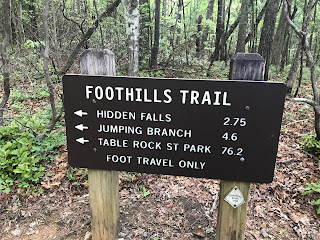
  • Check out online resources like Hiking Upward and All Trails for hikes and make sure those areas have no restrictions in place. National Forests provide many scenic trail opportunities, as does county and state parks. Check out the ones in your area. Enjoy a new trail and embrace a new adventure with new appreciation. I checked out new parks in my county and new trails in George Washington National Forest. And took a longer hike on the Foothills Trail of South Carolina and was amazed.


I found the beauty of wildflowers, waterfalls, views, and most of all, peace from the swirl of issues concerning the unseen enemy. I know I will have a new appreciation for nature and NOT take things for granted.

As trails open and opportunities increase, we should remain vigilant and safe for the safety and health of everyone.

  • Seek out those lesser known trails and avoid popular places. If a parking lot is crowded, find a different trailhead.
  • On the way to the trailhead, be safe in public places. Keep your distance, bring your hand sanitizer and face covering if elderly are present.
  • While on the trails, be sure to talk to folks but keep it at a safe distance. Don’t ignore others just because of social distancing. We need each other, more than ever.
  • Be trail safe. Do not put SAR and other rescue in harms way because of poor decisions. Do not bushwhack, do not take chances in unfamiliar areas, do not scale rocks and waterfalls. Know your limits out there and don’t overdo.
  • Take along the ten essentials including clothing like a hat and fleece, first aid kit, water and water purification, food, headlamp, a space blanket, a full charged cell phone, and navigation.

If you are backpacking:
  • Avoid popular trails like the Appalachian Trail. Check with the Appalachian Trail Conservancy and other trail organizations to see when it is safe to venture to this popular place for hikers. Seek out lesser known trails for your overnight experiences. Now is the time to be a discoverer!
  • DO not stay at shelters or use picnic tables or privies. Carry a tent.
  • Practice Leave No Trace ethics by carrying out all trash and burying waste. Know before you go.
  • Be self-reliant and responsible, and most of all, be safe.

Yes, this is a tough time. We will be changed forever by it, but in a good way as we appreciate nature and each other even more. Safe hiking to you!


Never miss an episode! Be sure to subscribe to the Blissful Hiking Adventures podcast.
Coming soon - Hiking in our National Parks

Also available, the Hiking Adventure series of books on the Appalachian Trail (both north and south) and the Florida Trail:
Barnes and Noble - Florida Trail and Appalachian Trail

Thursday, June 29, 2017

Campfire Talk

Okay, let's talk campfire lingo. Snap. Spark. Heat. Glow. Entertainment. S'mores. People-pleaser.

Fires seem to be the mainstay of an evening sojourn in the woods. Done properly and with care, they can add to an evening. Who doesn't like to share tales around the embers? Or roast marshmellows? Or take the chill out of a cool evening?

Unfortunately, more often than not, campfires are tools of abuse. There are an overabundance of campfire pits and rings built in the woods. Sometimes they scar the beauty of rocks at an overlook or are scattered all over the forest floor. They surround a single tent platform at such close proximity, I often wonder why the occupants' tent hasn't burned. I've seen woods totally devoid of downed limbs used to replenish the soil of the woods because it's used to feed the hungry flames of a large fire.

But more often than not, campfire rings are used as garbage containers in the wild. As a ridgerunner, I have cleaned out burnt cans, paper, numerous "hobo" meal wrappers - IE foil, from the pits. Some just leave whole garbage bags in them. Some have tried to burn their trash, only to have the burnt remains littering the pit and sinking in ash. I see lots of tn cans left in there. Why do folks think a tin can burns? Others toss used toilet paper and other unsavory items into the ring. And fire pits consistently used as an ashtray where hikers leave their cigarette butts.

So if we are to salvage anything good out of having a campfire - please do the following:

- Do NOT burn any garbage!! Not a scrap. Pack it all out. If you can carry in the food wrappers, you can pack out the empty ones!! That includes the foil from the "hobo" campfire meals. Pack it ALL out.  

- Don't build new campfire rings. There are plenty to be found in preexisting campfire rings out there. Share a ring with a neighbor. Or gather around the principle campfire ring at the shelters or established campsites. Who knows - you may develop friendships for life and save the woods from another scarred campfire ring.

- When you have a campfire, keep it small. Huge bonfires risk the vegetation, can cause a forest fire if they get out of hand, sterilize and damage the surrounding soil, and eat more of the wood in the area needed to replenish the soil. Huge fires also cast annoying light and smoke on other fellow hikers and campers who may want to sleep or who don't care to light a fire. Respect your neighbors.

- Some like campfire cooking. I'm not sure I like the idea of a blackened pot to stow away in my pack. I find a canister stove works very well. I've used a pocket rocket for 7,000 miles of hiking. But if it works for you, go for it.

- The flames of a fire can be entertaining but I've seen hikers use other methods. Like a candle lantern. I saw two hikers do it and were perfectly content.

If you choose a campfire, please be responsible so others can enjoy the beauty of our woods. And be sure to put out the fire completely. DO not leave it smoldering when you go to bed at night or leave in the AM.

With care and consideration campfires can be an enjoyable part of the hiking experience.    

Related Blogs:

Plan and Prepare for that Trip

Town Etiquette for Hikers

Friday, April 21, 2017

Town Etiquette for Hikers


It happens every year on the Appalachian Trail.

Yet another trail provider has discontinued its use to hikers because of bad behavior. Some businesses like motels no longer offering discounts to hikers due to ill practices. Or others have simply closed their doors to hiker traffic altogether. Just a few years ago the Appalachian Tail Conservancy implemented the trail community program to foster relationships between towns and hikers. As noted on their website:

“The Appalachian Trail Community™ program is designed to recognize communities that promote and protect the Appalachian Trail (A.T.).  Towns, counties, and communities along the A.T.’s corridor are considered assets by all that use the A.T. and many of these towns act as good friends and neighbors to the Trail. The program serves to assist communities with sustainable economic development through tourism and outdoor recreation, while preserving and protecting the A.T.
Designation as an Appalachian Trail Community™ and participation in the program is aimed to:
·         Engage community citizens, Trail visitors and stewards
·         Recognize and thank communities for their service to the Trail and hikers
·         Act as a catalyst for enhancing sustainable economic development
·         Aid local municipalities and regional areas with conservation planning
·         Help local community members see the Trail as a resource and asset”


This is a way to foster communication and relationship between towns, the trail, and hikers. Yet each year there are hikers that abuse the services towns provide. Because of the actions of a few, several of these communities have found their ties with the trail and hikers strained. We as hikers needed do our best to foster a good relationship with towns as well as educating them on hiking and trail life.

With this in mind, here are a few things to consider while in a town on a long distance hike:
Trail town of Hot Springs, NC


In towns -
Be sure to clean up as soon as you can when arriving in town (hiker funk to the public is not fun or funny). Saying please and thank you goes a long way. Don’t use foul language in public. This is a town with families. Greet townspeople with a smile. Say hello. If they ask questions, talk about your hike but also ask them questions, too. And be sure to thank them for what they do for hikers.

Practice Leave No Trace Principle, yes even in town. And that means, showing respect, courtesy to others and to businesses. Respect the town, the people, and law enforcement. No drunkenness or drug use (the main cause of trail providers closing their doors!). You’re hiking a trail, committing yourself to discipline each and every day. You can also be disciplined while in towns. If you can’t get off the mind-altering substances or limit drinking, then get off the trail. Trails and towns are not for partying, nor do folks want to be subjected to it. Towns are where people live and work. They want peace. 

In hostels and motels - don’t trash the rooms, leave copious amounts of trash everywhere, leave dirt, blood etc. in the sink, floor or tub. Don’t use the motel’s white washcloths to wash dirty stuff. Clean out the sinks and tub after use. Pick up the room before you leave. If there is a NO PET policy, abide by it (that includes NOT saying your dog is a service animal when he/she isn't!). If there is a hiker limit to the rooms, abide by it. And don’t take the extra toilet paper rolls. If you can’t afford to buy a roll, then you shouldn't be out hiking because you can't afford it. If you do need a roll, ask management if you can pay for one. Be sure to tip the housekeeping staff and leave more than enough money when staying at donation-basis hostels - least $20 for your stay plus $5 for laundry.  

In restaurants – abide by the policies of the restaurant by not hording food, coming into the restaurant unbathed, or wearing dirty footwear. Tip for your meals. Don’t assume you can walk in and charge electronics unless you are a paying customer.
    
Towns are great places to eat.  

In Laundromats – don’t leave trash, dirt or other debris in the place. This is a public facility where townsfolk also do their laundry. Please clean up before you come with your laundry. And wear clothes. If you need to, bring or mail or bounce a box with a pair of lightweight shorts and t shirt you can use while in town. Or use your rain gear like your jacket and pants (NOT a poncho with nothing underneath!). Also, don't do laundry with just a towel wrapped around or something else. Kids go into laundromats too, as does Grandma.


By being respectful, we hikers can go a long way in protecting a valuable asset to the trail experience – the trail towns. 


Saturday, February 18, 2017

Trail Maps – Why Bother?

Being a frequent contributor to hiker forums, I have seen the Appalachian Trail map debate time and time again. And time and time again I see the same reasons crop up as to why hikers choose not to carry maps or even find them an essential part of their gear list -  

Common arguments against taking maps on the Appalachian Trail - 

-          The trail is blazed white and easy to follow. You can’t possibly get lost
-          I know the trail cold, so I don’t need them
-          I never plan to get hurt, face a drought, need a road to bail a friend out or meet a friend, avoid storm damage or any such calamity because my hikes go perfectly every time
-          My guidebook is good enough
-          Maps are too heavy
-          Maps are too expensive
-          Some maps cover such a small portion of the trail, they’re a waste
-          I don’t want to have to rely on a mail drop for a map
-          I can always look at someone else’s map
-          Maps are for whimps
-          Maps are only for those who like looking at something else besides the woods
-          Maps are only good for TP (toilet paper...)
-          Your own special reason…..

Now the Reasons Why you Need a Map – based on the above

-          Yes, the Appalachian Trail is blazed white. But did you know there are places where other areas are blazed white? State Game Lands of PA are. I have seen dirt roads with obscure white or other areas. Just because white blazes often signify the AT doesn’t mean other areas won't also use the same markings. And that can mean you veering into other areas with the potential of – uh – getting lost. Also, many designated wilderness areas have infrequent trail blazing. Or blazes are obscured due to rerouting or lost over time. It’s easy to miss them at road junctions. Or pranksters could have obliterated them. In different seasons trails can be hard to follow and blazes spaced far part or gone by blowdowns or chipped bark. Or fresh snow obliterates them. 
-          So you never plan to get hurt or encounter adverse weather which may necessitate your need to bail out or emergency camp at a place that has water? A map will show you areas that may suffice for an emergency campsite. Maps help point out road crossings or alternate trails that can lead to bail-outs and safety if you or a friend need them. Or if you run low on supplies. Maps help show detour routes if the trail is blocked by severe storm damage (i.e. hurricane damage in season or fire season when trails close) or high water from a t-storm. Maps also help locate adequate, uncontaminated water sources where reliable ones in a guidebook may not be flowing. Essentially, maps could save your hike and maybe even your life
-          Guidebooks are giving elevation profiles of the trail but don't have the other features a map contains. They do not have contour lines. You don't know for sure where that trail is really going from a guidebook. There are no side trails outlined on it except in verbage. They don't always point out all upcoming road crossings and trails, nor do they tell you where they lead. They cannot pinpoint obscure water sources you may need, esp in drought conditions or in beaver fever areas. Guidebooks provide words not visual illustrations of the trail and its surrounding areas
-          If you think a tool that could help you or save a life is too heavy, then maybe your aren’t cut out for the rigors of hiking
-          Ditto for $$. You’ll spend it on other things, maybe even brew or tobacco, but not on a map. Priorities - ?
-          Maps are never a waste if they are needed. OK – you may have been fine on a section without them. But no doubt the one time you need it, you won’t have it. 
-          Mail drops are fine for forwarding paper maps  lots of places besides the PO will take them. Another option is a trail map phone app. I have used this successfully on the Florida Trail. They are excellent resources and with lots of info about waypoints, water sources, towns, etc. 
-          Sure you can look at someone else’s map, but why not have your own? This is your hike. Carry
your own stuff and be self reliant. If you ask me, the whimp factor in the next response can also apply to the one who refuses to carry a map then must rely on another to provide it for him / her.
-          I believe the other answers are addressed above when one see the value in a map. Also, maps are part of Leave No Trace, that is, planning for your hike. Maps can be life savers. I have never known a hiker having to quit a hike because of carrying a map. But for sure some have had to quit because they did not have one – i.e., they got lost, they got hurt and didn’t get medical attention in time to help the injury, had to take an unintentional detour or other reasons.

Bottom line is, be prepared and take some form of a map.

Google clubs for the trails you wish to hike to look for maps

Guthooks Map App   

Wednesday, August 10, 2016

Observations of a Summer Appalachian Trail Section Hike – Bland to Catawba, Virginia

This summer my ridgerunning job ended early, allowing me to continue my section hike of the AT in a quest to compete it for my third time. This trip I began just north of Bland and ended at Rt 311 at
Atop Peter's Mtn
Catawba. The week-long journey found me with the usually aches and pains of sectioning, plus some interesting weather and other observations (some of which were NOT that great).

Weather. As with any section hike, once must be ready for weather changes. I began the hike in humid, warm, dry weather that found water a challenge. I packed clothing for that as the weather dictated such conditions throughout the week. But leave it to nature to change midway through, and me wishing I had thrown in that fleece over shirt or maybe a pair of leggings to use at night (I improvised by using the leggings off my convertible pants and used my windshirt inside my sleeping bag). Later in the week the rains came, the winds blew at elevation, and it turned downright chilly! Esp. as I hiked without rain gear (too hot otherwise) and got soaked. And soaked clothing in a wind came make you feel cold fast. So even in summer one must prepare for hypothermic issues and not always take a forecast verbatim.

A welcome pipe at a spring north of Pearisburg
Water. Water was scarce in the beginning. This water source with the friendly pipe made gathering great, but some sources that were even spelled out in the guidebook were dry at times. But once the rains came fast and furious midweek on, water was in abundance. Still, make sure you have a good guidebook and maps to help you plan for the water issue, esp. if you need water and are unsure where the source originates. One source I collected from I discovered, via my map, ran from pastures and along a road – i.e. Sinking Creek. Not quite pristine. I dumped it and waited for the Sarver spring.

At Niday, a full garbage bag left there
Shelters. Every shelter I stopped in had some kind of trash issue, either inside or in the fire pits. One fire pit at Niday even had a full bag of someone’s garbage. NOT cool. I spent one night in a shelter during one stormy night, and after that experience, feel I MUST add and addendum to this
blog with a blog on shelter etiquette.

Physical issues. When the weather came, esp the rains, I had to wear wet socks two days in a row. I had never done that and rapidly developed issues, such as blisters ON TOP of my toes no less and even some fungal issues. I carried three pairs of socks but honestly could have used a fourth. Esp in this long section with wet weather, with no chance to dry out, and no chance to do laundry btw Pearisburg and Catawba. I also had some back issues as I found I needed to carry water a fair 
distance to make certain campsites. A good anti-inflammatory helps (if you can get a 
prescription for meloxicam, it works well) as
does drinking lots of water.

Reroutes. It pays to make sure of any trail changes in your route before you leave. Pearisburg has a major reroute that added on over two more miles to the hike, necessitating a change of camping locale. Be sure to plan for things like this and adapt as needed on your hike.

Enjoy your wander wherever it leads you!

Dragon's Tooth rock formation, AT Virginia


Thursday, May 05, 2016

Plan Ahead and Prepare for that Trip!

I thought it was good to repost this. I was out during the FIRE in Shenandoah recently and found hikers woefully unprepared for what was happening. Not only did they NOT know about the fire and the closed trails (!), but did not plan for water in dry areas or their hike in general. Every season as a ridgerunner I see backpackers failing to plan and prepare for their trip They end up miserable, possibly in danger, or having to end the journey prematurely. Because of it, they lacked what was needed to help ensure a timely and safe hike. Others do not seek out the regulations in the area where they plan to camp - such as securing permits for Shenandoah - and must alter their plans


With that in mind, I have taken principles from the Leave No Trace web site to help illustrate some good ideas when deciding on a hiking trip. Plus I add a few of my own.  

"Adequate trip planning and preparation helps backcountry travelers accomplish trip goals safely and enjoyably, while simultaneously minimizing damage to the land.

PRE-TRIP PLANNING
Poor planning often results in miserable campers and damage to natural and cultural resources. Rangers often tell stories of campers they have encountered who, because of poor planning and unexpected conditions, degrade backcountry resources and put themselves at risk.

WHY IS TRIP PLANNING IMPORTANT?
You may want to create additional answers for this list:
  • It helps ensure the safety of groups and individuals.
  • It prepares you to Leave No Trace and minimizes resource damage.
  • It contributes to accomplishing trip goals safely and enjoyably.
  • It increases self-confidence and opportunities for learning more about nature.

SEVEN ELEMENTS TO CONSIDER WHEN PLANNING A TRIP

  • Identify the goals (expectations) of your trip.
  • Identify the skill and ability of trip participants.
  • Select destinations that match your goals, skills, and abilities.
  • Gain knowledge of the area you plan to visit from land managers, maps, literature and online resources.
  • Choose equipment and clothing for comfort, safety, and Leave No Trace qualities.
  • Plan trip activities to match your goals, skills, and abilities.
  • Evaluate your trip upon return note changes you will make next time.
CONSIDER Also:
  • Weather
  • Terrain
  • Regulations/restrictions (permits, camping areas, fires)
  • Private land boundaries
  • Average hiking speed of group and anticipated food consumption
  • Group size (does it meet regulations, trip purpose and Leave No Trace criteria?)
  • Water availability
Meals are another element to trip planning that can have a profound effect on the impact a group has on a backcountry area.

Benefits of Good Meal Planning:


  • Reduced trash.
  • Reduced pack weight, resulting in faster hiking times and less fatigue.
  • Reduced dependence upon campfires for cooking.
  • One-Pot Meals and Food Repackaging

Planning for one-pot meals and light weight snacks requires a minimum of packing and preparation time, lightens loads and decreases garbage. One-pot meals require minimal cooking utensils and eliminate the need for a campfire. Two backpack stoves can be used to cook all meals for large groups if you have two large pots (one large pot can be balanced on two stoves when quick heating is desired). Don't rely on campfire cooking (and please, do not make aluminum foil HOBO meals. I have seen too much foil left in campfire rings). Most food should be removed from its commercial packing and placed in sealable bags before packing your backpacks. Sealable bags (like ziploc bags) secure food and reduce bulk and garbage. Empty bags can be placed inside each other and packed out. This method can reduce the amount of garbage you must pack out at the end of the trip and eliminate the undesirable need of burying unwanted trash or burning it in a campfire (NEVER burn your trash!)"


Other things to consider. It's important to know before you go. Know where you are going. Know your physical limits, especially as you are carrying a backpack over uneven terrain. Bring maps, compass, guidebooks of the area you plan to hike. There are map apps for your phone. In some areas it's good to have a GPS device. Familiarize yourself with the area. Bring a cell phone for emergencies. Know first aid and what to do in an emergency, for unplanned weather, or if you are injured. Bring adequate clothing and equipment like a good tent (don't rely on trail shelters) and water purification. Always pack an extra day of food in case you must stay for an extra  day because of bad weather. Don't rely on fires to keep you warm but have a good sleeping bag and warm weather clothing like merino wool underwear, an insulated jacket, a hat, and rain gear. Be sure to keep your sleeping bag and clothing dry at all costs.

Don't let poor planning and preparation ruin your dream.  


Thursday, September 10, 2015

Caring for the Wilderness

I have just completed my third season as the ridgerunner for Shenandoah National Park. Inevitably I
encounter hikers who ask me then – what is a ridgerunner?

Basically I hike the Appalachian Trail within the park boundary (some 100 miles worth), greeting hikers (I greeted over 500 thru hikers – those hiking the entire AT in one year – this season), serving as a roving information board, checking trail conditions and inspecting the huts (or shelters) where hikers stay. As this is my third year in the park and I have done all the trails within the park on the off season, I am fairly well able to handle the different questions hikers have, which are many. It’s my job to try and know all I can.

The role of a ridgerunner is also important to both the trail maintainers and the National Park Service. I serve as their eyes and ears. I work closely with each agency partner. I let them know when there are issues that need to be dealt with.

For instance, I let them know about garbage issues in the park that can lead to wildlife encounters.

This garbage was left in the same area where the bear attacked. PACK IT OUT


 I tell maintainers about unsightly graffiti inside huts or other things that need taken care of.

Graffiti of any kind in a shelter is not only unsightly but also criminal

  
And I let maintainers know where the big blowdowns are on the trail.


This season was not without incident for me, however. While camped at Pass Mountain Hut a few short weeks ago, a young bear inexplicably attacked my completely empty tent. The bear broke a pole and did some other damage. 


The park then came to inspect and try to ensnare the bear. Earlier that day I had found half eaten food inside the privy area. Adequate food storage and carrying out ALL trash (including not leaving any trash in the fire pit) helps alleviate a bear’s interest in humans and food. As well as chasing away any bears that are spotted near these structures or places where hikers are camping. My role in being an educator in Leave No Trace principles helps protect both the hiker and the park.


Of course I also enjoyed a nice view. 


Who can’t help but enjoy a place of immense beauty and natural wonder? I help the hiker have an enjoyable time outdoors while helping maintain and protect a park busy with the many visitors that come seeking fellowship with the wilderness that Shenandoah provides.  


Saturday, September 05, 2015

The Meaning of Life and a Trail - A Walk in the Woods Review

A Walk in the Woods will certainly generate AT interest. But not in the way some might think.


This movie is essentially about two older people looking for the meaning of the rest of their life by taking a walk on the Appalachian Trail. One battles alcohol. The other is a washed-up author who is seeing friends die. It is a scenario those over 50 see very much in their lives. Which is why I believe the film will MEAN more to the older generation. Young folks will likely find it boring, uninteresting, or upset the way young people are portrayed in it as either hip studs ready to rescue the old codgers or obnoxious and mean. This is not a movie for young people in that sense. The movie examines the thoughts of older people. But in this, young might learn something valuable about life as they see parents and grandparents go through these struggles. Which is a good thing as these days people seem to be very “me centered.”

As for the hiker, ones that have done the AT won’t like a few mishaps with the trail or mistaken scenery placement. But this is not a documentary. Tons of those out there. It shows a few of life’s lessons and also lessons you can learn on the trail. Like what happens when one doesn’t follow Leave No Trace with food and the bears come (although grizzlies are NOT on the AT). I was also happy to see that twice the hikers showed ethics with waste disposal. There was a small 5 second clip of maintainers taking care of the trail. It did show some beautiful spots and how the trail can invigorate you and cause life changes. That will be its draw, as well as the draw of simply seeing a Hollywood flick with AT written all over it that then extends to people buying the book. Which led to the initial surge of hikers after the book’s release.


I am still concerned about the impact of the trail by those that don’t know what to do. And I feel the movie could certainly spur others to try and do it without being adequately prepared. It did not show so much the rigors but in many cases, interesting trail life. That the trail has lots of pit stops and comraderie and social aspects. That will draw folks. But preparation is the key. As well as preservation in observing Leave No Trace.


But do find a mean to life by a hike, whether in yourself are in others. A walk fills the soul in ways this modern world can never do.

Wednesday, May 27, 2015

Why "A Walk in the Woods" will be A Nightmare in the Woods (updated)

Today I am seeing all over the clip for the movie coming on Labor Day. "A Walk in the Woods" with Hollywood’s Robert Redford. I see it and shudder.


Why?

I work out on the AT as a ridgerunner in Shenandoah National Park. I am already witnessing the increased usage on the trail and what that means. Overflowing huts (shelters in Shenandoah), full privies, toilet paper flowers, burnt out cans and cigarette butts, gallons of garbage. 

Please don’t mistake me. I am thrilled when newcomers come take their first walk on the AT. When people post pictures and experiences of their times. I do all I can through education and this blog to get them ready.  If I could count on hikers who followed the Leave No Trace principle, who were courteous, who carried out their garbage, who did what they could do to protect the trail and the environment, themselves and each other, I’d rest a bit easier.

But that isn’t the case. Already I am seeing such increased usage that areas are being stretched beyond capacity, and the movie hasn’t even been released. And the usage by hikers who don’t know and don’t care. Garbage is overflowing. Tents are stacked on top of each other as hikers wrestle for space.
One of the AT huts, May, 2015, and tents everywhere. Pre-movie.
When there is no space, they ignore camping regulations and camp wherever they want, even with their dogs by the springs. It’s already a nightmare out there and it hasn’t even begun.

I shudder also that trail organizations seem woefully unprepared for the coming onslaught and coming damage. They don’t seem to understand what is going to happen. Nothing has been planned. No action has been taken to cope with the masses that will flock to the AT after this movie comes out. I’ve had some higher-ups ask me as ridgerunner what will happen. I say it, but that’s it. Nothing has been done. 

Now it is too late. The masses are coming. There will be unprepared hikers (and more rescues), garbage galore, campfire pits and campsites scarring the land. Shelter areas strewn with trash,
15 gallons of trash found in a privy, May 2015 - pre-movie
with overflowing privies, and worn-out volunteer maintainers that can’t keep up and get burned out.


Thanks a bunch, Hollywood. "A Walk in the Woods" will become the AT and the maintainers' Nightmare in the Woods. 


UPDATE 8/6/15

Since this posting, the ATC has instituted the #protectyourtrail initiative. Please become involved and show what you are doing to #protectyourtrail via social media and through pictures! By doing even a little we all do a lot to preserve the trail and a wild, walk -in-the-woods experience.


Thursday, March 12, 2015

When to Use the Phrase “Hike Your Own Hike” (HYOH)


HYOH!!


I have seen the phrase Hike Your Own Hike (or HYOH) used quite frequently on hiker forums and Facebook groups when it comes to various hiking issues. It appears to be the pet phrase of choice whenever there are issues that crop up, including anything from water treatment to bear bagging to camping illegally or using drugs trailside. There is a reason to say “Hike your own Hike” (HYOH) and a reason not to use it as an excuse for something illegal, immoral or downright dangerous. It would be akin, I suppose, to saying – “Hey...do whatever you want.” 

But you can’t just do whatever you want if it restricts another’s enjoyment of the woods, if it will destroy or harm wildlife and or the trail or wilderness, if it will endanger your life or someone else’s, or it’s just plain against the law.

I once saw this phrase used when someone, for instance, instead of following the white blaze of the Appalachian Trail, decides they feel like a wander down a blue blaze trail to see other scenery, or they decide maybe they would rather canoe the river instead of hiking or bicycle or road walk a portion. In that instance they are doing their journey the way they want without the legalistic approach following a white blaze or the trail. They are hiking their own hike.

Contrary, a hiker says he’s going to forgo Maryland’s rules of no camping between designated areas and set up his tent wherever he chooses. Or consuming alcohol at the shelter areas in MD (it is posted no drinking along the AT there as its a state park).That is not HYOH - Hike Your Own Hike. This is disobeying posted regulations which are put there for a purpose. It’s not to restrict but to protect both the hiker and the wilderness experience from the multitude of other hikers also looking for a pristine place to wander. Or a hiker plans not to use bear-proof technique to guard food from wildlife which is against the ethics of Leave No Trace and protecting wildlife. This is also not Hiking Your Own Hike.

It is hoped people will use the wisdom of HYOH the way it is meant to be used – to enjoy the trail and the journey that best suits your needs and plans. It should not be used as a catch-all phrase and excuse that can potentially harm you, another hiker, or the wilderness.


Monday, November 03, 2014

Being Considerate of Others on the Trail


We share the trail not only with woodland companions but with other hikers, hunters, wanderers, pets
etc. It's important that the outdoor experience is enjoyed not only by us but also by others. The video by the Appalachian Trail Conservancy has good tips for showing consideration to others. Some other tips to consider -

1. The Leave No Trace Principle of Planning and Preparing. By planning your hike so you arrive at the right time, you won't disturb others by a late night arrival. If you find you will be arriving late or just like to night hike, plan to camp out somewhere away from those who will likely be sleeping when you arrive (maps are helpful if your itinerary changes). I was not happy when I found someone setting up a tent right behind mine way past hiker midnight (after 10 PM), shining a headllamp and waking me up. We are not all on the same time table.  

2. If you are leading a large group, like scouts, a youth group, etc, plan to stay away from other individuals. Groups, not matter how hard leaders try, are always noisy Do your homework ahead of time as to where your group will be staying on the trip. Consider alternative ideas and perhaps scout out locations ahead of time. Plan to split up the group if the camping areas will not work. Be flexible in your planning.

3. Watch your pets. Although you may love your dog and feel he or she won't hurt a flea, there are hikers that are genuinely afraid of them and don't wish to share shelter space with a dog, etc. Plan to stay out in your tent and make sure your dog is on a leash when encountering other hikers. Don't assume your dog will get along well with other hikers and with wildlife.

4. Cell phone useage. Do your talking away from the shelter or other communal areas, overlooks, or other hiker gathering places. Many hikers come to the woods to get away from man made devices. Use headphones when listening to music. Think about those around you.


Monday, April 28, 2014

Trail Maintainers - the Unsung Trail Angels of Hiking

It's that time of year when trail crews are out tackling the issues of trail maintenance that come up on trails like the Appalachian Trail. Keeping pathways clear and usable for trail traffic is a time consuming but rewarding experience. Trail organizations offer ways for interested people to become trained, certified in certain areas such as chain saw to help clear and maintain trails. Without these efforts, trails would become unusable. Also, the changes of weather affect the trails, leading to erosion issues. Steep grades in trails require a reassessment and may need to be rerouted. Without trail overseers and maintainers, there would be no trails and limited ways of enjoying the wilderness experience.

Maintainer works on a reroute of the Appalachian Trail
The trail upkeep maintainers face -

1. Initial assessment of trail conditions - some clubs hire ridgerunners and others to patrol trails and report their conditions so maintainers know what to look for. This helps a maintainer avoid having to carry heavy equipment while looking for a blowdown or other hazard. If there are no ridgerunners or its out of season the maintainers must walk their section and look for hazards and issues that need to be addressed. This also includes trailside shelters and privies. They then must return and fix the issues they find.

2. Garbage removal - maintainers look for trash and clean it up, including trailside trash and trash in shelters and inside privies. As you might imagine, this is difficult and problematic work at times (and should be totally unnecessary if hikers carry out their trash and don't put trash in the privies!).

3. Foliage - maintainers are responsible for cutting back foliage, many times mowing or weed whacking high grass, and taking care of limb and tree blowdowns. They must carry in the tools necessary to accomplish the task, anything from hand clippers to chain saws (requiring certification). Trail blazing is also done as well as checking for signage.

A maintainer will need to walk in and either saw or take a chainsaw to remove the obstacle

4. Trail maintenance - with the precipitation a trail receives, maintainers look for issues regarding water run-off. In many cases with this and to stop trail erosion, they install water bars (where water moving down the trail turns when it comes in contact with the water and is directed to the lower edge of the trail and runs off) and check dams. Sometimes a steep graded trail becomes so badly eroded that a reroute is needed. Or a reroute can be considered to remove a trail from a road walk or to avoid a hazardous intersection. Trail clubs and maintainers are involved in the process as well as constructing the new trail
Building a Check Dam

5. Shelter maintenance and privy maintenance, including inspection, fixing of issues such as roof leakage, cleaning out and maintaining privies


Trail groups are in dire need of people who love the trail and want to help preserve the trail for future generations. Many offer courses, training, etc on various aspects of trail maintenance. PLEASE - find a trail organization near you and become involved! Even a little can help a lot!


Wednesday, July 24, 2013

10 Things I Dislike About Backpacking...

Okay, here it is. The ten things I dislike about backpacking. Created WHEN I was backpacking last week, of course...

1. A thunderstorm that soaks all your stuff, AFTER you just left the hostel or town with gear dried out from the last encounter.

Thursday, May 23, 2013

Running Jersey Ridges - Guest Blog on the Life of an AT Ridgerunner Part 1

Blissful Hiking Welcomes Guest Blogger Jerry "Grasshopper" Adams who shares the life of a ridgerunner working New Jersey and New York. If you are ever in the neighborhood, say hello to a ridgerunner (they love to chat!). Blissful of Blissful Hiking is working this summer in Shenandoah National Park.

Running Jersey Ridges, Part 1
Birdman and Grasshopper
By Jerry Adams 

The summer thunderstorm blew through Delaware Water Gap, up and across the Kittatinny Ridge, its winds whipping the Backpacker Campsite on a steamy August afternoon. 

Its thunder boomed and its lightning crackled as heavy wind and rain slapped the tarp against the tent. Braced inside, I pushed back hard to support straining poles, happy to be dry but knowing that storms earlier in the summer had snapped a pole, collapsed the tent and sent the 16x20 tarp sailing.

The wind died as the storm moved north.  A steady rain continued as I slipped outside to check for damage and see how others camped on the mountain had fared. Thankful for having gotten to shelter just ahead of the nasty weather, I knew others had not been as fortunate and I used my emergency radio to call park police about some very soggy hikers headed their way.

I knew at least a dozen people were scattered along the four miles of Appalachian Trail back to the visitor center at the Delaware River; I was especially worried about one heavyset couple I had passed an hour earlier, just before the storm.

They were moving slow, wearing the wrong shoes, and starting to mumble and whine about the long walk back to their car. The four miles up to Sunfish Pond was harder than they had expected and the pond was very nice; what, now they had to hike four miles back?

Stopping to chat, because that’s what ridgerunners do, I did my best to cheer them on with the news that it was only three easy miles to the bottom. Yes, I agreed, walking downhill often hurts more than walking uphill; and yes, hiking is harder than walking.

They trudged slowly on; I moved quickly and eagerly up the trail, heading north, excited to be starting a 75-mile hike across New Jersey.

Again.

Hiking with the trail name “Grasshopper,” I had thru-hiked the Appalachian Trail in 2011 and had fond memories of the five hot days I had spent crossing Jersey. Blessed with the opportunity to return in 2012 as a ridgerunner known as AT-3, I spent five days each week in the woods, hiking different chunks of trail, and covering about 40 miles.  I was living the dream -- paid to hike and spending the season with hikers, trail volunteers, work crews, and Trail Angels and hoped to give back and help them as much as they had helped me on my own long walk north.

All told over the past 18 months, I had hiked more than 2500 miles and had lived in the woods for nearly a year.  

Hired by the Appalachian Trail Conservancy, the New Jersey Parks Service, and the New York / New Jersey Trail Conference, I was one of three ridgerunners in Jersey for the season.  We are “boots on the ground” to help folks safely enjoy the AT, its forests and footpaths, to share the gospel of Leave No Trace and to keep tabs on the trail and those using it.

We share directions and advice, remind people to store food in bear boxes, and to pack out their own trash. We explain that the sign saying “No Ground Fires” really does mean that campfires are not allowed (yes, this means you) and that “no alcohol” means “no alcohol.”  And yes, the leash law applies to your dog, too.

Off-trail, we shared housing with summer interns and firefighters at the Lake Wallkill Wildlife Refuge. In the field, we were wonderfully supported and shuttled by the good folks who work in and manage the state’s four public forests, especially Rebecca Fitzgerald at High Point and Ernie Kabert at Worthington.

I had been camping at Backpacker for five days, hiking nearby trails and keeping tabs on Sunfish Pond, a gorgeous glacial lake that attracts hundreds of hikers and tempts many to ignore the ban against camping and swimming.

I had gathered trash from near the pond and in the bear boxes and I was making my rounds, when I encountered an Outward Bound group headed north.  We had met the night before and they happily gathered again to hear me “talk trash.” Holding my bag aloft, I said, “I know this isn’t your trash, but this is what others have left. This is why we …   Leave No Trace!”

“Leave No Trace!” they shouted. “Thank you, Grasshopper,” they say in chorus as my lesson ended, and they moved on.

Part Two