Showing posts with label Sickness. Show all posts

Monday, July 13, 2020

The Virus Thing and Hiking – 8 Ways to Protect Yourself and Others

UPDATE - 7/23/2020 Please consult the local, state and federal areas for these closures and please obey the regulations. Change your hiking plans. A thru hike can still be accomplished in a calendar year by some creative ways once the emergency is over. Be flexible, and most importantly, don't give up on your dream!


Every year viruses do plague the trails, esp the AT which comes down with its annul norovirus bug every spring. So of course hikers are going to wonder whether the Coronovirus will hit too.

First off, be sensible and take simple steps to safeguard yourself and those around you. A good hike in the woods is actually therapeutic for the mind and body. Cardiovascular exercise makes you feel good and releases good hormones like endorphins. Fresh air and getting away from crowds are other good things.

But be sure to follow some simple, common sense steps as there are other hikers out there and towns are also on a hiker’s list of stops for resupply. But right now avoid the heavily used areas. Seek other lesser known trails. Seek solitude. And hang in there. This too shall pass.

1.       Carry hand sanitizer with at least 70% alcohol on the trail but handwash as much as possible in towns.

Practice social distancing on the trail at all times.

2.      No staying in shelter areas. Some areas like on the AT are closed to backcountry camping too. Plan ahead and avoid closed areas. Have guidebooks and maps to tell you where campsites are if it is allowed.


3.       NO sharing of food at any time. Do not take food from hiker boxes. Plan accordingly so you have enough food for your hike. As resupply is limited in some towns, do mail drops.

4.       When in town, avoid communal and gathering areas. A motel room or a separate room when offered at hostels might be good for now (though many hostels are now closed. Budget your money so can prepare to spend a little extra for a single room. Hand wash frequently and use your hand sanitizer in town. Call ahead with hostel and other providers to see if they are open (many are not).

5.       It may be hard to find rides (hitchhike) right now as people may be reluctant to pick up hikers. Plan to walk or call for a shuttle. Budget to pay for the shuttle rides. Call ahead on shuttles though as some providers are canceling services for now.

6.       If you hear in the trail grapevine there is sickness ahead, avoid staying in the affected area by slowing down or speeding up.  Carry extra food in case you must spend extra time on the trail and can’t get to town right away.

7.       Carry good foods to eat (less of the empty sugars, etc), Vitamin C tabs, Zinc. Get enough rest. And watch the alcohol, etc.

8.       If you feel sick and especially have the norovirus or a fever, get off the trail and stay away from others. Know the symptoms of each type of virus. (Noro for instance is the stomach bug with runs and vomiting. Coronovirus is a fever and dry cough with chest irritation. The common cold is a sore throat and runny nose and usually no fever). 


   Related Links:  The Virus and Maildrops


     Check out my Blissful Hiking Adventure and my series of books on the Appalachian Trail - Mountains Madness and Miracles and the Florida Trails - Gators Guts and Glory!


Saturday, May 23, 2020

Hiking in a Post Viral World


Episode One - Hiking in a Post Covid World – (Show Notes)

In this inaugural episode, host Lauralee Bliss, trail name Blissful, begins with the uncertainty the Covid health crisis placed upon hikers when trails were closed and plans curtailed. How we respond as hikers to these changes in plans says much about us and what we will accomplish.

Initial response – get angry
Follow up response – get rebellious and hike no matter what the restrictions
Neither generate peace.

How can we look at it differently?

Use the unseen enemy of this virus and its effects to rethink and re-plan hikes.
  • Check out new trails using new guidebooks and maps.
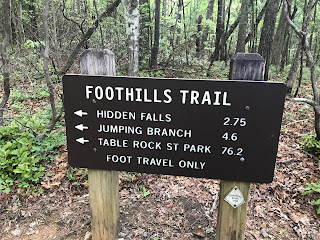
  • Check out online resources like Hiking Upward and All Trails for hikes and make sure those areas have no restrictions in place. National Forests provide many scenic trail opportunities, as does county and state parks. Check out the ones in your area. Enjoy a new trail and embrace a new adventure with new appreciation. I checked out new parks in my county and new trails in George Washington National Forest. And took a longer hike on the Foothills Trail of South Carolina and was amazed.


I found the beauty of wildflowers, waterfalls, views, and most of all, peace from the swirl of issues concerning the unseen enemy. I know I will have a new appreciation for nature and NOT take things for granted.

As trails open and opportunities increase, we should remain vigilant and safe for the safety and health of everyone.


  • Seek out those lesser known trails and avoid popular places. If a parking lot is crowded, find a different trailhead.
  • On the way to the trailhead, be safe in public places. Keep your distance, bring your hand sanitizer and face covering if elderly are present.
  • While on the trails, be sure to talk to folks but keep it at a safe distance. Don’t ignore others just because of social distancing. We need each other, more than ever.
  • Be trail safe. Do not put SAR and other rescue in harms way because of poor decisions. Do not bushwhack, do not take chances in unfamiliar areas, do not scale rocks and waterfalls. Know your limits out there and don’t overdo.
  • Take along the ten essentials including clothing like a hat and fleece, first aid kit, water and water purification, food, headlamp, a space blanket, a full charged cell phone, and navigation.

If you are backpacking:
  • Avoid popular trails like the Appalachian Trail. Check with the Appalachian Trail Conservancy and other trail organizations to see when it is safe to venture to this popular place for hikers. Seek out lesser known trails for your overnight experiences. Now is the time to be a discoverer!
  • DO not stay at shelters or use picnic tables or privies. Carry a tent.
  • Practice Leave No Trace ethics by carrying out all trash and burying waste. Know before you go.
  • Be self-reliant and responsible, and most of all, be safe.

Yes, this is a tough time. We will be changed forever by it, but in a good way as we appreciate nature and each other even more. Safe hiking to you!


Never miss an episode! Be sure to subscribe to the Blissful Hiking Adventures podcast.
Coming soon - Hiking in our National Parks

Also available, the Hiking Adventure series of books on the Appalachian Trail (both north and south) and the Florida Trail:
Barnes and Noble - Florida Trail and Appalachian Trail

Monday, October 08, 2018

No Matter the Trips and Miles – You are Always a Newbie


I was so excited to hit the trail again. It had been several months since my car accident that had caused major back issues. I had been out once for an overnight during the summer, but for a few quick miles. I was ready to hit the trail for some fairly good walking and cover about 70 miles in four days. It had been a trail I’d done so many times, I had it memorized. The graded Appalachian Trail in Shenandoah National Park. The outlook was bright.

Unfortunately I had several things working against me right off the bat. First, I had a pretty good sore throat going when I left. Meaning I was battling sickness. I waved it off, having endured as much on the Florida Trail and thought it shouldn’t affect me much. Second was my backpack. Since my good one was getting reconditioned by ULA, I went with a very old one. I figured it would be fine for a four day trip. Third was the idea I could do some good miles each day on what I believed was easy trail for the most part.

All Wrong

The first day was lovely. I ascended from Chester Gap into the park, enjoying the pretty but warm day. Not a few hours into the trip I felt a certain exhaustion beginning to grip me. There was some decent ups and downs on this route. I worked away any issues as I did most everything else. But the unplanned tiredness, coupled with some muscular pain from the backpack that began erupting early on clued me in I ought to cut miles the first day. But I can be pretty stubborn and pushed through 
to reach Hogback Mountain and a 17 mile total for the day. Yes, I hiked 17 miles on day one.

I was pretty exhausted that night but still was able to check out a backpacking meal I had created for a magazine article (to be published in Mother Earth Living in March, 2019). Somehow I managed to get my act together to review the recipe and even take some pictures using a selfie stick I threw in at the last minute (which worked out well).

But then next day I felt it. I enjoyed a pretty sunrise over Hogback, but I was extremely sluggish and I hurt everywhere, with blisters also on my big toes (a situation I deal with on every new start until the prized calluses form). The 17 miles on day one had completely done me in. I was okay for the first two hours but after that, it was a mental push just to do minor elevation gain. The illness was
Hogback Mtn sunrise
sapping strength too.

So with great reluctance I called for a pick up at Thornton Gap, having done 27 miles in two days. At least I was able to get out but it took several days for me to recover from fairly intense muscle pain and the blisters, along with a cold.

I keep forgetting that my best on a trail was formed by consistent hard work and continual hiking. Not zooming out into long stretches straight from the house.

So here’s the lessons –

1.       DO NOT hike high miles on day one

2.       Change your plans

3.       Don’t go if you feel a cold coming on (sore throat, aches, etc.) cut your miles, head to a hostel, or wait on your trip.

4.       Remember that despite the many trails and miles of the past, of which the mind can play tricks, whenever you go out, you are still a newbie in your body  


Pass Mtn view


Monday, March 27, 2017

Sickness on the Trail

It's that time of year once more - when hikers head for the trails and disease follows. The chief complaint on the trail like the Appalachian Trail is the Norovirus, which seems to strike every hiking season.

Noroviruses are found in the stool or vomit of infected people and on infected surfaces that have been touched by ill people. Outbreaks occur more often where there are more people in a small area like hostels, shelters and privies contaminated by sick hikers.

How noroviruses are spread
People can become infected with the virus by:

  • Eating food or drinking liquids infected with noroviruses
  • Touching surfaces or objects infected with noroviruses and then touching own mouth, nose, or eyes
  • Having person-to-person contact (with a norovirus-infected person) by
    • being present while someone is vomiting
    • sharing food or eating from the same utensils
    • caring for a sick person
    • shaking hands
    • (also) eating out of contaminated food bags or food contaminated by the virus
  • Not washing hands after using the bathroom and before eating or preparing food.

Norovirus infections are not usually serious
Noroviruses are highly contagious, but infections are not usually serious. People may feel very sick and vomit often or get diarrhea, becoming dehydrated if lost liquids are not replaced. Most people recover within 1 or 2 days and have no long-term adverse health effects.


What to do if you get norovirus (I am adding more to this)

  • Rest
  • Drink plenty of fluids as you tolerate it. Start with clear fluids first - like broth from Ramen, Gatorade, weak tea with a little sugar, just plain water, jello and popsicles (if you can get it). As your stomach allows, eat bland foods like crackers, white bread, Ramen noodle soup, jello if you can get it. Advance your diet very slowly. Avoid greasy and fried foods. When you can tolerate it, replace electrolytes and bacteria lost with bananas and yogurt.
  • Wash hands often.
  • Baby wipes can help clean irritation left from the "runs"

How to prevent getting and spreading noroviruses (and other illnesses)

  • Wash hands often. Wash hands after using the bathroom and before eating or preparing food. Wash hands more often when someone in your hostel/shelter is sick.
  • Avoid shaking hands during outbreaks
  • Use alcohol-based hand sanitizer along with handwashing or if facilities for handwashing are unavailable. Make sure the sanitizer is at least 70% alcohol. I recommend Purell Advanced.
  • Do not eat out of another hiker's food bag (like passing the bag of GORP or bag of chips around the campsite or shelter) Be careful where you are accepting food at hiker feeds and by generous trail angels. Packaged food is best. use had sanitizer whenever possible.
  • Avoiding shelter areas and other communicable spots, esp during the disease season.
  • Carrying packets of Emergen C to add to water helps replace vitamins lost and can boost your immune system.
  • Boost your immune system by eating good healthy foods while hiking. A balance of proteins, fats, carbs, supplemented by dried veggies and fruits is best. Avoid empty carbs and sugars. Consider also taking a vitamin supplement.