Showing posts with label Food Preparation. Show all posts

Friday, May 15, 2020

Mail Drops and the Virus


During this time of issues with unknown resupply in towns and the current virus outbreak, I highly recommend mail drops for resupply on the trails. So what goes in your drop?


Food for what you need for the days until your next drop. Write out a sample menu list. See this food list for other ideas.


Sometimes extra treats can be put into the box from home you can’t get elsewhere to enjoy on your day off from the trail. Especially treats you may not find.

A roll of toilet paper in a Ziploc along with some baby wipes. For women: light pads are helpful. A new pee rag bandana. If you know approx when you might need feminine supplies, it helps to have that in your drop too along with any medications you might take.

Medications. I have a set of personal meds and vitamins I take (see the first aid blog for what I add vitamin-wise. I usually carry enough meds for ten days. Be sure you are ok on the homefront with your prescription meds and plan ahead (you can ask for "vacation refills" ahead of time to pack into maildrops). I have added a sandwich-size Ziploc with some extra Advil and Tylenol.

Pages copied from the Thru Hiker Guide or the Companion (AT) or specific trail guide you need for the next section of trail you are hiking. 

I've also added for long distance ventures – 

Some brand new Ziploc bags to replace the ones I use in my pack. And large envelope in case I need to mail things home. 

A few extra band aids, leukotape, etc to replenish the first aid kit. Small bottle of hand sanitizer to replace. 


For fuel, use the trail guidebooks and trail forums to find out where they are obtainable on the trail.


Be sure to send your mail drop Priority Mail and allow plenty of time (I give it at least a week). 


The drop should be addressed as follows for a Post Office delivery (Use your REAL name, not your trail name, and be sure to carry ID to pick up at the PO). Be sure to have a RETURN address on it in case you need to ship it home. Writing or marking something obvious or your last name on the outside side of the box so the carrier can see it among the piles of boxes helps too. Send it Priority Mail. 
Sample address:

Jane Doe
General Delivery
Hanover, NH  03755
Hold for AT Hiker: ETA (state the expected date of your arrival)


Other businesses, hostels, etc are accepting maildrops and are good options if you feel you may arrive on a weekend when the PO might be closed. However some of these are closing due to the virus. CALL AHEAD with your ETA to see if they will be open. If you mail to other locations, be sure to put your real name and "c/o" - care of and the address being sent. Include your ETA.


If you are going to be late (like more than five days), courtesy asks that you call the place holding your drop and alert them.

If you sent your drop Priority Mail to the Post Office, are going to be late, changed plans, etc and you have NOT gone to the PO and claimed it at the window, they can bounce your mail drop up the trail or send it home for you at no charge. 

During this time of uncertainty, but really, at all times on a hike, planning and preparing is essential to a great time in the outdoors. 


Related Links: The Virus Thing and Hiking - 8 Ways to Protect Yourself and OthersNeed to be at home for a while? Check out my Hiking Adventure Series on the Appalachian Trail - Mountains Madness and Miracles and the Florida Trails - Gators Guts and Glory!


    

Friday, August 30, 2019

Hiker Food Kinds of Stuff


Food! Probably one of the most important things a hiker thinks about. And hikers get HUNGRY. It's the nature of the high level of activity. Your body is using lots of calories, and in colder weather, calories to stay warm too. Muscles are getting torn to shreds by constant abuse and the need of good protein to heal. Food is a necessity, and good food is a requirement to keep the hike going.

But sad to say, a lot of hikers seem to think that they can hike huge miles subsisting on potato packs and ramen. Have you ever read the back of those packages and the nutrition they contain?
Zip, zero, zilch. Nothing. No protein. No vitamins and minerals. No bone and muscle preserving calcium.

And this is what your body is saying when all you eat is that stuff. "HEY!! How do you expect me to move for you if you don't feed me right?"

Good nutrition is a must on a long arduous hike in the wilds. A good balance of proteins, carbs and fats to make everything work in sync.

Okay, so how does one accomplish that on a hike? After all, you must carry what you eat. And thankfully its a lot easier then it was some 30 to 40 years ago. Reading Ed Garvey's book when he hiked in 1975, he had to carry little cans of tuna and chicken. Now we have foil packets that are light and easy to use. Canned chicken dried in a dehydrator makes a good addition to rice and couscous mixes. Ever been to any of those Mennonite or Amish farmer's markets? Especially if you plan to have some mail drops - they have fantastic dried foods for hiking - everything from well balanced trail mixes (salty, sweet and spicy) to dehydrated veggie flakes, couscous in various flavors, to soup bases, and even these highly concentrated tiny squares that when I eat one, boy it can keep me going for a good long while. Trader Joes and Whole Foods have a great selection of dried fruits (I have become partial to dried cherries of late). Target has Simply Balanced fruit strips with no added sugar, made of fruit puree (check the labels on the strips to make sure they are fruit based). Of course there are old standbys like PB and Nutella which give good protein and fats. Some hikers even carry olive oil when the weather is really cold to add fat to a diet. And of course bars are everywhere, from the Luna bars (which are actually pretty good and last a while; even my hubby liked it though they say nutrition for women which means nothing) to Cliff bars, Power Bars, and I like Nature Valley granola bars for crunch and also the Sunbelt bars pack a good carb punch for the weight. But all the bars tend to be heavy, so watch how many you carry.

These are typical foods stuffs I have had for my meals on the trail -

Breakfasts - Cliff bar, Pop Tarts (if I carry them I take Annies), oatmeal (when cold out, add dried fruit and nuts to fortify it), trail mix, granola bars, granola cereal, small bagel and PB, and usually I eat a piece of fruit like a the all natural fruit sticks from Target or simply dried fruit, granola

Snacks - trail mix (both salty variety and sweet, though I much prefer salty like sesame sticks, flax seed chips, cheese crackers), mixed nuts, mini candy bars, Snickers, sometimes a Power bar or Luna bar if I have a tough hike that day

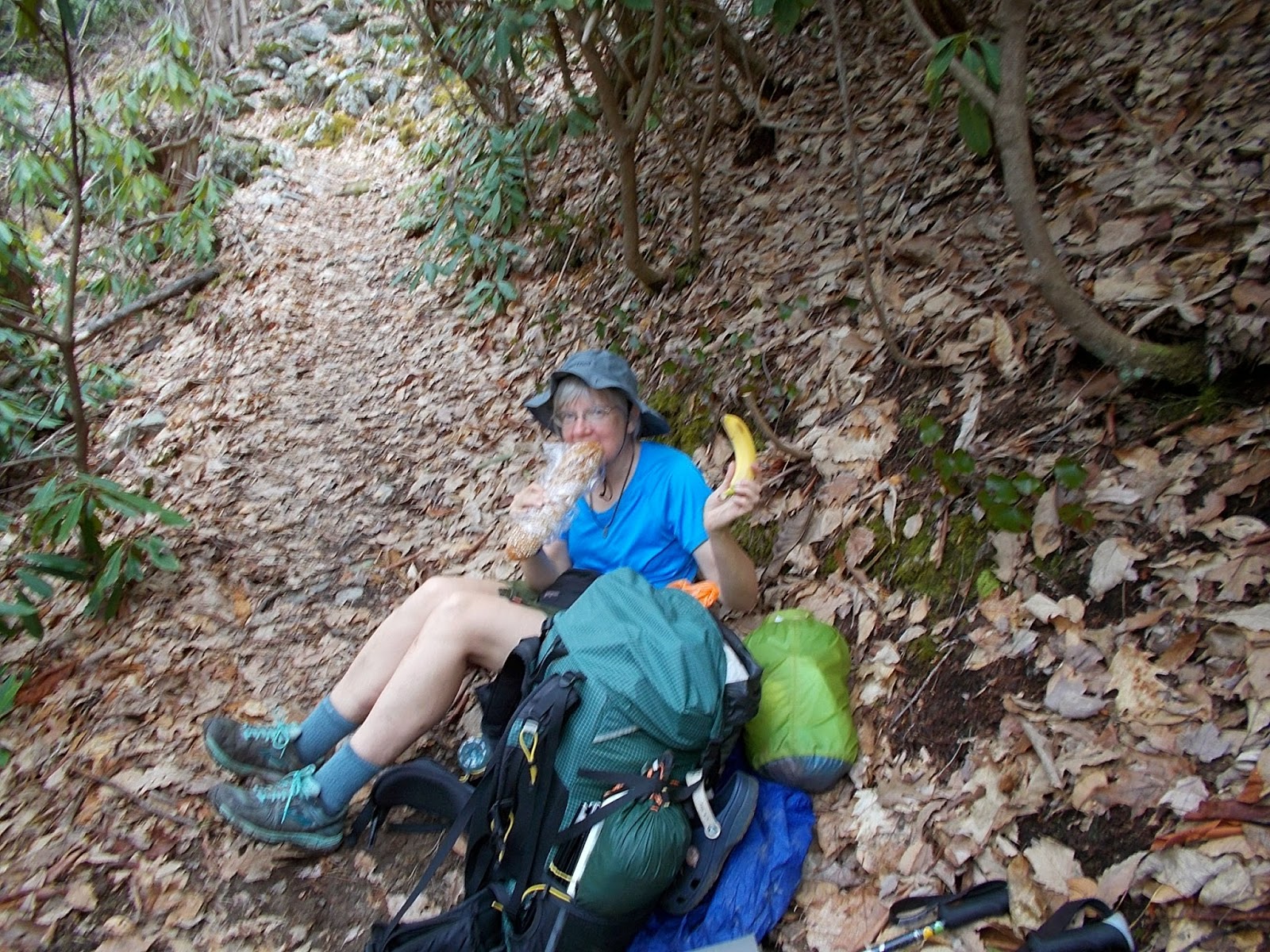
Lunch - the small whole wheat bagels; I found the thin round sandwich bread then have now to be very packable, tortillas, pepperoni (put in a ziploc if hot out as it can get greasy), cheddar cheese, beef sausage, jerky (I make my own), PB, raisins

Dinner - I dehydrate beef mixtures and canned chicken to add to mixes. I dehydrate peas and green beans also to add to rice mixes. I use tuna packets. I used to use Knorr mixes that have FINALLY cutout the msg. I also make my own using good noodles, non MSG broth bases (look for them in health food stores), a little cornstarch as thickener, some spices to taste, and add in dehydrated veggies, chicken or beef. There is also couscous, a turkey dinner recipe, Annie's mac and cheese (much better than Kraft and you get more in the package. Bring some dried milk to add to it and noddle mixes.). I've gotten a pesto mix (watch for MSG though or dehydrate some bottled pesto) and added it to a bag of dried tortellini for dinner. If I eat Ramen, I discard the flavor packet and bring my own seasoning in a snack size Ziploc bag, and fortify it with dried peas and green beans and dried meat. I sometimes use the Mountain House / Backpacker Pantry meals, but they are pricey for long distance hikes. Dessert - Rice Krispy bar, Little Debbies oatmeal pie, packets of Oreos, snack size candy bars, etc

For more ideas and recipes on eating healthy while backpacking, check out my article at Mother Earth Living magazine.

Extra - take a good multi vitamin with iron if you're out for a long time. Some hikers use the kiddie gumdrop ones. I use ones I know are good from a Vitamin shop and are in my maildrops.

Trail Magic rocks! Especially fresh fruit.
Good wholesome food will keep you going and will help you enjoy the hike a whole lot more.

Thursday, November 01, 2018

A Thanksgiving Recipe Trailside


When you are out hiking for days, weeks, even months on end, thoughts of food occupy your mind day and night. So it was on our adventure on the Appalachian Trail. Knowing you are burning upwards of 4-6,000 calories per day hiking, it's nearly impossible to carry that much food to satisfy your need for nutrition. And eating meals trailside, day after day, one looks for creative ways to get the calories you need and still eat a good meal. Check out this blog also for hiker food kinds of stuff.


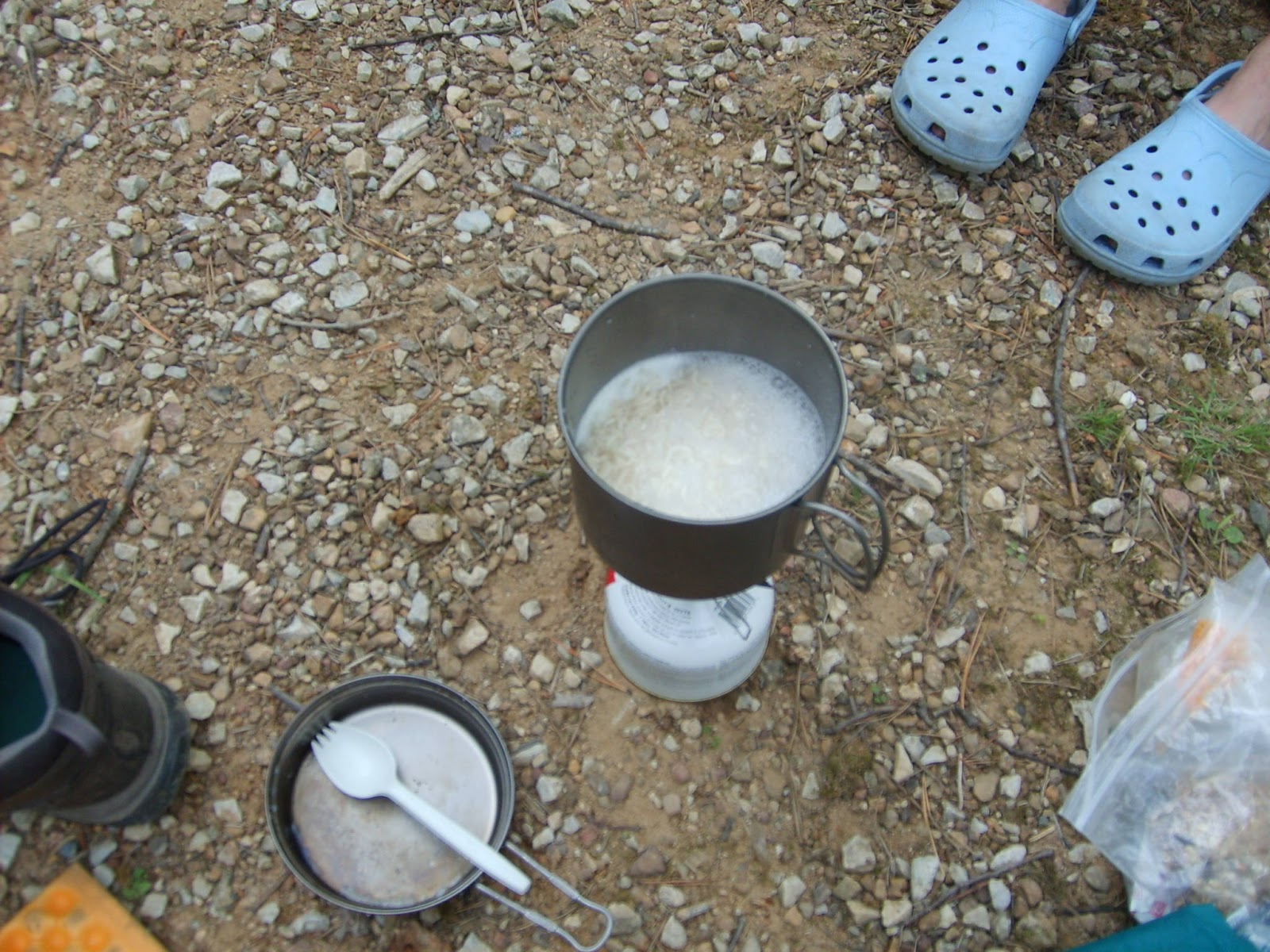
Here is a typical day on the trail. We cooked over a tiny stove called a pocket rocket that ran on a canister. We made one pot meals to share. Since our pot came with a lid, I gave Paul Bunyan food in the lid and I ate out of the pot. The pot it made out of titanium, a great lightweight option for cooking. We liked the pocket rocket canister stove to cook our meals. A simple lexan spoon or a titanium spork ( a combo spoon with fork tines, my fav) works great as a utensil. 


Lobster trailside? Not quite, but I was invited to a hiker's home for the evening while I hiked the White Mountains of New Hampshire. The invite came as a total surprise, hence the name "trail magic." The hiker (or in this case, trail angel) rolled out the red carpet for me, including a dinner of lobster and wine. Wow, I was really living it up on the trail! Towns are a great place to resupply food needs and to get a good meal, especially if a hiker can nail an AYCE restaurant (all-you-can-eat).


Ready for a THANKSGIVING recipe? Yes, you can enjoy Thanksgiving dinner on the trail with this which Paul Bunyan and I enjoyed many times on the trail. It feeds two.

(This recipe is adapted from the The Appalachian Trail Food Planner by Lu Adsmond, published by the ATC)

1 can chicken, dehydrated (canned chicken dehydrates really well, believe it or not. Don't use real chicken, it's too tough to rehydrate).
1/2 packet chicken gravy mix (I like the organic variety without msg)
1/4 tsp salt (carry more for taste)
dash of pepper
1/4 tsp poultry seasoning
(put these ingredients in one snack size ziploc bag)

1 cup stuffing mix (I like Pepperidge Farm)
1 cup unseasoned potato flakes
(put these ingredients into another Ziploc bag)

When you get to camp, let pkg 1 sit in your pot filled with approx 3 cups of water to rehydrate as you make camp. Let it come to a boil, boil for 10 minutes. Put the pot in a pot cozy to keep warm. Add package number 2. Let stand a few minutes. Adjust seasoning and liquid to taste and consistency,
Wa la, Thanksgiving dinner on the trail!


Check out my 4,000 mile Appalachian Trail Adventure on Kindle and in paperback! Find out what a teen thinks about hiking with Mom and what it's like to be a solo adventurer! Makes a GREAT gift, too.  


Thursday, May 05, 2016

Plan Ahead and Prepare for that Trip!

I thought it was good to repost this. I was out during the FIRE in Shenandoah recently and found hikers woefully unprepared for what was happening. Not only did they NOT know about the fire and the closed trails (!), but did not plan for water in dry areas or their hike in general. Every season as a ridgerunner I see backpackers failing to plan and prepare for their trip They end up miserable, possibly in danger, or having to end the journey prematurely. Because of it, they lacked what was needed to help ensure a timely and safe hike. Others do not seek out the regulations in the area where they plan to camp - such as securing permits for Shenandoah - and must alter their plans


With that in mind, I have taken principles from the Leave No Trace web site to help illustrate some good ideas when deciding on a hiking trip. Plus I add a few of my own.  

"Adequate trip planning and preparation helps backcountry travelers accomplish trip goals safely and enjoyably, while simultaneously minimizing damage to the land.

PRE-TRIP PLANNING
Poor planning often results in miserable campers and damage to natural and cultural resources. Rangers often tell stories of campers they have encountered who, because of poor planning and unexpected conditions, degrade backcountry resources and put themselves at risk.

WHY IS TRIP PLANNING IMPORTANT?
You may want to create additional answers for this list:
  • It helps ensure the safety of groups and individuals.
  • It prepares you to Leave No Trace and minimizes resource damage.
  • It contributes to accomplishing trip goals safely and enjoyably.
  • It increases self-confidence and opportunities for learning more about nature.

SEVEN ELEMENTS TO CONSIDER WHEN PLANNING A TRIP

  • Identify the goals (expectations) of your trip.
  • Identify the skill and ability of trip participants.
  • Select destinations that match your goals, skills, and abilities.
  • Gain knowledge of the area you plan to visit from land managers, maps, literature and online resources.
  • Choose equipment and clothing for comfort, safety, and Leave No Trace qualities.
  • Plan trip activities to match your goals, skills, and abilities.
  • Evaluate your trip upon return note changes you will make next time.
CONSIDER Also:
  • Weather
  • Terrain
  • Regulations/restrictions (permits, camping areas, fires)
  • Private land boundaries
  • Average hiking speed of group and anticipated food consumption
  • Group size (does it meet regulations, trip purpose and Leave No Trace criteria?)
  • Water availability
Meals are another element to trip planning that can have a profound effect on the impact a group has on a backcountry area.

Benefits of Good Meal Planning:


  • Reduced trash.
  • Reduced pack weight, resulting in faster hiking times and less fatigue.
  • Reduced dependence upon campfires for cooking.
  • One-Pot Meals and Food Repackaging

Planning for one-pot meals and light weight snacks requires a minimum of packing and preparation time, lightens loads and decreases garbage. One-pot meals require minimal cooking utensils and eliminate the need for a campfire. Two backpack stoves can be used to cook all meals for large groups if you have two large pots (one large pot can be balanced on two stoves when quick heating is desired). Don't rely on campfire cooking (and please, do not make aluminum foil HOBO meals. I have seen too much foil left in campfire rings). Most food should be removed from its commercial packing and placed in sealable bags before packing your backpacks. Sealable bags (like ziploc bags) secure food and reduce bulk and garbage. Empty bags can be placed inside each other and packed out. This method can reduce the amount of garbage you must pack out at the end of the trip and eliminate the undesirable need of burying unwanted trash or burning it in a campfire (NEVER burn your trash!)"


Other things to consider. It's important to know before you go. Know where you are going. Know your physical limits, especially as you are carrying a backpack over uneven terrain. Bring maps, compass, guidebooks of the area you plan to hike. There are map apps for your phone. In some areas it's good to have a GPS device. Familiarize yourself with the area. Bring a cell phone for emergencies. Know first aid and what to do in an emergency, for unplanned weather, or if you are injured. Bring adequate clothing and equipment like a good tent (don't rely on trail shelters) and water purification. Always pack an extra day of food in case you must stay for an extra  day because of bad weather. Don't rely on fires to keep you warm but have a good sleeping bag and warm weather clothing like merino wool underwear, an insulated jacket, a hat, and rain gear. Be sure to keep your sleeping bag and clothing dry at all costs.

Don't let poor planning and preparation ruin your dream.  


Wednesday, March 06, 2013

Hiker Nutrition: Dehydrating Foods to Add to Meals

I must admit I get alarmed sometimes by what hikers choose to eat while on long distance hiking trips. From plain noodles to Ramen to mashed potatoes, it's the same old, carb loading meals with little nutritional value. Backpacking meals don't have to be nutritionless, boring or expensive. With just a little time and a food dehydrator, you can dry meats and veggies to add to your ho hum rice and noodle dishes and make them not only yummy but good for you when you are out hiking those long miles.

It begins with a good dehydrator. I use the Nesco Snackmaster that has various temperature settings for the foods you wish to dehydrate. It comes with several trays and the noise level is minimal. Plus dehydrating is quick and easy.


Dehydrating meats is simple. Want to add chicken to your dishes? You can! Canned chicken, that is.  It dehydrates and best of all, rehydrates well. Open the can, pour off the broth, and break up the chunks. They will resemble thread-like pieces. Spread them out on the trays. When crisp, package into Ziploc snack bags to add to your favorite Knorr Rice dishes, couscous, etc.

To dehydrate beef for meals, buy a good lean cut. To make a beef puree to fortify your dishes or to make trailside beef stroganoff, add 1/2 cup soy sauce to 1/2 lb trimmed beef, cut up. Marinate for 15 minutes, add 2 1/2 cups of water and boil until tender. Puree in a blender with 1/2 cup of liquid. Spread on a jelly roll pan and dry in a 150 degree oven for 4 hours, stirring at times. It is done when crisp. Package in snack size Ziplocs and store in the fridge or in freezer until you need them. (Recipe obtained from "The Appalachian Trail Food Planner" by Lou Adsmond).

To add veggies to your dishes - 
   Start with frozen bags of vegetables from the grocery store. Peas and green beans dehydrate and rehydrate well.


 You can thaw them ahead of time or just place frozen on the trays (they will dry anyway). Spread the veggies on trays, make sure they are separated. When veggies are crinkly and not soft, they are dry.


 Package up your meats and veggies into Ziploc bags to add to dinners on the trail. I put these in my mail drops.

When you arrive at camp for the night, a good trick is to let your dehydrated food sit in water for about half an hour in the pot while you set up your camp. Then when it comes time to cook, the meat and veggies are already partially rehydrated and the cook time for the rice and noodles makes it ready to go without wasting fuel.

Now you have a good way to add needed protein and vitamins to otherwise starchy rice and noodle mixes. And it sure beats the cost of those pricey dehydrated backpacker meals.


Previous blogs on the topic:  Maildrops  Hiker Foods  Dehydrator Food Recipes


Saturday, April 07, 2012

Some Dehydrated Food Recipes

Note: I have not tried these but they look tasty.  

Courtesy of Excalibur  - manufacturer of a unique food dehydrator.

Camper’s Favorite Chili
 
·         1 ¼ C. canned pinto beans
·         2 C. tomato sauce—homemade or commercial
·         12 Oz. dried pasta (such as elbow macaroni)
·         3 Whole jalapeno peppers, seeded and minced
·         5 Oz. ground beef (optional)
·         ½ onion minced
·         Seasoning as desired
 
Brown ground beef and cook pasta until done. Combine all ingredients in large saucepan and heat to boiling. Season to taste. Spread on Paraflexx® covered dehydrator try and dehydrate at 155°F/68°C until dry approximately 5 hours. To rehydrate, cover with water, boil stirring occasionally and serve.   Serves 4


One Pot Spaghetti
 
Combine in 1 gallon freezer-weight zip lock bag:
 
·         1 C. dried mushroom pieces and/or slices
·         ¼ dried diced green bell pepper
·         3 T. dried onions
·         1 envelope dried spaghetti sauce (8 oz.)
·         ½ tsp. garlic powder
·         ½ tsp salt
·         3 C. thin spaghetti noodles
 
Boil 4 cups water in medium pot. Add mix. Cook stirring frequently, about 5 mins. If noodles stick add a little water. Remove from heat, cover, let stand 5 min. or until noodles are tender.   Serves 2-3


Camp Scrambled Eggs
 
·         3 eggs
·         1 T. water
·         ¼ tsp. black pepper
·         1/8 tsp. salt
 
Place all ingredients in bowl and beat very lightly until just blended. Add any of the following variations or implement any of your favorite ingredients:
 
Cheese mushroom:
·         6 fresh mushrooms sliced
·         ¾ C. any variety grated cheese
 
Herb:
·         3 sprigs parsley minced
·         ¼ C. onions chopped
·         1 tsp. any dried herbs
 
Spanish:
·         1 C. tomato sauce
·         1 to 2 jalapeno peppers, fresh or canned, seeded and minced
 
Blend together egg mixture and any of the variations. Place in skillet with 1 T. olive oil. Scramble until done. Place on Paraflexx® sheet and dehydrate at 155°F/68°C until dry. Approximately 5 hours. To rehydrate, cover with boiling water, stir occasionally and serve. If there is an excess of liquid pour it out.


Basic Jerky
 
·         3 to 4 lbs lean beef (cut into strips)
·         ½ cup tomato sauce base or catsup
·         ¼ cup soy sauce
·         ¼ cup Worcestershire sauce
·         1 tsp onion powder or 2 tsp onion flakes
·         1 tsp garlic powder
·         ½ tsp cracked powder
·         ½ tsp hickory smoke flavoring or salt
 
Blend all ingredients and soak meat strips in mixture. Keep refrigerated 6 to 12 hours, stirring and turning meat occasionally in marinade. Once meat is marinated to desired strength, drain off marinade and dry.


Hawaiian Jerky
 
·         1 lb. lean meat cut 3/16” thick
·         1 tsp. salt
·         1 tsp. ground ginger
·         1 T. brown sugar
·         ¼ tsp. cayenne pepper
·         1 crushed garlic clove
·         ¼ C. pineapple juice
·         ¼ C. soy sauce
 
In small glass bowl combine all ingredients except meat. Stir to mix well. Place meat 3-4 layers deep, spooning sauce over all layers. Cover tightly in refrigerator for 6-12 hours stirring occasionally. Take meat out of marinade and place on dehydrator trays. Dry at 155°F/68°C for 5-6 hours or until completely dry. Makes about ½ pound jerky.
 
 
Cranapple Leather
 
·         1 cup apples, chopped
·         ½ cup cranberries
·         Honey or sugar to taste
 
Puree apples in blender with a small amount of water. Add cranberries and sweetener if desired. Pour on Paraflexx®, kitchen parchment paper, or plastic wrap covered dehydrator trays and dry at 135°F/57°C until leathery.


Power Bars
 
·         3 C. rolled oats, barley or wheat
·         2 ½ C. powdered milk
·         ½ package citrus flavored gelatin (approx. 8 oz)
·         1 C. sugar
·         2 T. honey
·         3 T. water
 
Place rolled oats, powdered milk, and sugar in bowl. Add water to honey and bring to a boil; dissolve gelatin in honey and water mixture. Add dry ingredients. After mixing well add water a teaspoon at a time until barely most enough to be molded. Shape into bars. Dehydrate at 155°F/68°C until hard.


Nonnie’s Great Granola
 
·         4 cups rolled oats
·         ½ cup wheat germ
·         1 cup brown sugar or ½ cup honey
·         2 cups coconut
·         1 cup sesame seeds
·         1 cup almonds and walnuts, chopped
·         ½ cup wheat or soy flour
·         1 tsp vanilla
·         1 tsp cinnamon
·         1 cup oil
·         1 tsp salt
 
After dehydrating the above ingredients add:
 
·         1 cup raisins
·         ½ cup dates
·         ½ cup dried pineapple
·         ½ cup dried apples
(or any combination of dried fruits)
 
Mix the first group of ingredients together in a large bowl and spread onto Paraflexx®, kitchen parchment paper, or plastic wrap. Dehydrate at 155°F/68°C (approximately 3 hours) until crunchy. Add the second group of ingredients. Serve with milk or plain yogurt.